

Moving to Another State with a Car Preparing for Your Move
Moving to another state isn’t easy; it requires quite a lot of planning, packing, and making sure that all of your documents are in order. In this article, we’ll be going over some of the important things you need to make sure you do before, during, and after your move to make it as smooth as possible. Hope this article helps. Enjoy.
Vehicle Preparation in the Moving Process
Since you will be moving using your vehicle, you need to make sure that it is ready to help you and not be a hindrance. This may require some mechanical maintenance, like an oil change, filters, fuel filters, etc, or it may require some additional work like tire rotations, brake pads, etc.
When moving, it's important to streamline the storage of the vehicle, so perhaps think about securing a luggage compartment on top of the car if it's equipped with rails. These compartments are fully sealed once closed, and they are easy to reach and ideal for adding extra luggage space to your vehicle.
Insurance Regulations at the State Level
Insurance is an absolute must; in fact its mandatory in every state, though what sort of insurance depends on the state you will be moving to. Some states require the bare minimum of personal risk insurance. Some states operate under the basic tort-based insurance models, while others operate under the non-fault system.
Assessing Coverage Needs in Your New State

As mentioned above, there are different insurance requirements according to the state, so make sure you familiarise yourself with the state-level requirements for insurance in your new state. Base it on your personal risk profile and factor in things like the urban density, commuting distance, and weather conditions - all of these might justify insurance companies charging more.
Shopping for New Insurance Providers

You might be able to swap over your insurance to the same provider if they have coverage in that area, but you might also have to get a new policy if your circumstances of living are different from your old state. So, it's time to shop around - look for coverage that provides you with the safety you need, based on your most common risk factors, such as your driving style, the typical roads you travel on, or if you often go out of state. These are important considerations.
Cancelling Old Insurance Coverage
Only cancel your old insurance once you’ve registered your vehicle in your new state, and the new insurance is active. It’s illegal to operate a vehicle without active insurance, so it's better to have a 1-2 day overlap of coverage, rather than have none at all. The cancellation can be done online, saving you time and effort.
Registering Your Vehicle in a New State
All states require re-registration of a vehicle if there’s a residency change from state to state - the requirements for documentation may vary from state to state.
Required Documents for Vehicle Registration
The documents that you may be required to submit include proof of identity, proof of residency, vehicle title, current registration, and valid insurance. It’s also possible for you to have to submit the bill of sale, odometer disclosure statement, any safety and emissions inspections and additional certificates as per state rules.
State-Specific Requirements and Tests
Some states have requirements on the emissions test, safety test for the vehicle’s condition, other states are far more lenient and require a quick check-up or no state emissions and safety inspections - all specifications can be found on your new state’s DMV web page. There are also uncommon requirements like weight certifications for trucks or modified vehicles.
Fees Associated with License Changes
Fees vary greatly based on the state and the requirements of the DMV. They might be based on age, vehicle type, weight of the vehicle, value, but the most commonplace fees are title transfer fees, registration fees, the cost of issuing a plate (+ plate customization), emission test fees and any local taxes.
Logistics of Moving Your Vehicle - Choosing Between Driving and Shipping Your Car

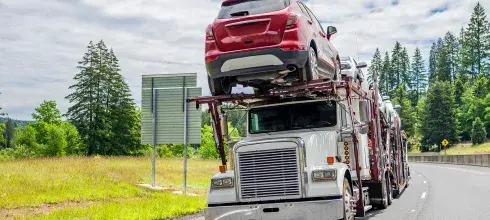
When moving to a new state with your car, there are basically two options that might have come to mind - driving the car or getting it shipped beforehand. Both options have their time and place, with different pros and cons - driving might cost less, but requires some additional preparations, while shipping might be more expensive, but it's safer for you and the vehicle, especially if you are shipping across the country.
Benefits of Driving Your Car
Driving a long distance is an American tradition, roadtripping, cannonball runs, etc - it's all about the experience and the time you spend behind the wheel with friends, family or your thoughts. It can be great, but it can also be tiring, dangerous and oftentimes boring, especially if your route is mainly on the highway.
Cost Considerations for a Road Trip
The costs of a roadtrip might be substantial depending on the total distance of the drip, because little things start adding up. Things like fueling costs (different states have different fuel prices), food, accommodations, wear and tear on the vehicle - all of these things start adding up.
Depending on the route, there might also be tolls to pay, which may vary, but they can also add up. In general, roadtrips can be expensive and can be quite dangerous if your vehicle isn’t up for the task or if you are not a confident driver.
Familiarity with Your Vehicle
Whether you are a veteran driver or a new and inexperienced one, chances are you need some time to get used to the quirks and characteristics of a specific vehicle. If you haven’t driven a long distance with your daily commuter, you might not be aware of some nuances that become blatantly obvious over the span of hours behind the wheel.
Like the glare from the dashboard, or the road noise due to poor sound insulation, or maybe the weak radio signal, the overall consumption of fuel or even the feel of the steering wheel - all of this will determine how well you travel over long distances. If you are not as confident a driver and don’t know your car that well, it might be a better idea either to have someone else drive or to forego this option altogether.
Flexibility and Convenience During the Move
You get to choose and control a lot more if you are the one doing the move with your car. You get to pick the route, how often you stop, where you go, what you visit, how fast you are driving, etc. It can be a lot more convenient to pack your bags, put them in the trunk and set off, rather than sit around and wait for someone to come and pick up your vehicle.
For once, you might need it until the last day of your stay in the state - maybe you use to commute to work, or you have errands to run, or you live in a rural area, and the only realistic way of getting around is with a car.
Drawbacks of Driving Your Car

There are significant drawbacks to driving your own car to your new state of residence - some are based on safety, others are based on convenience - but overall, it's about the time and money you spend travelling.
We as a company have been around long enough to have seen all kinds of scenarios, from students leaving for school, to military relocations on new PCS assignments, to financial migrations from California to Texas. All of these have something in common, and that’s the big distance of travel.
Doing it with your own car means one more thing to worry about, or have to control or take into account. By choosing professional help, you basically give yourself some more breathing room.
Wear and Tear on Your Vehicle
The wear and tear on your vehicle is undoubtedly one of the biggest drawbacks of driving your own car when you are moving. It's not only stress on the tyres, brakes, fuel system and engine, but also other expensive and hard-to-maintain components.
It lowers the vehicle’s value, rapidly decreases the maintenance interval on all components, including oil changes, break pads, etc. Not to mention the risk you put your vehicle to from road chips and salt in the winter.
Potential Road Hazards and Challenges
The road can be a dangerous place, with more than 16,468 reported car accidents per day and growing. Despite the increase in safety measures, better roads, and safer cars, car accidents do happen either due to mechanical failure or, more likely, due to human error.
Either way, the road is dangerous regardless of the season, either due to road hazards like road debris, refuse, or what have you. All of this poses a danger to you, your posessions and the people around you.
Time Commitment and Travel Fatigue
The time commitment is substantial - doing the relocation yourself takes quite a big toll on your body and your free time or the time to rest, which are both quite important for health and mental stability. Driving over a distance of 2,000 miles might take more than 40 hours of non-stop driving, which is literally impossible to do by a single person.
Realistically, it would take you 6-7 days to do the drive, which is 285 miles per day - not that great, but that’s a week's worth of traveling and at the end of the travel, you still have to unpack all of your belongings.
Advantages of Shipping Your Car
It takes it off your plate - shipping a car is a lot about the convenience of it all, because dealing with it yourself or driving the car can be quite time-consuming. It's a service with quite a lot of advantages to it; here are just some.
Professional Handling and Care
Having a professional service do the handling for you means that you basically don’t have to do anything but present the car for collection and receive it on delivery - that’s it. You don’t have to find a carrier, deal with them or negotiate on the price; you don’t have to worry if you are getting a fair rate or if they have insurance - a professional car shipping company will vet them for you beforehand.
Convenience of Not Driving Long Distances
Maybe you don’t have the time to do it, or the weather is bad, and the road is dangerous - either way, working with a car shipping company saves you all of the trouble. It reduces the wear and tear on your vehicle, it helps you organize your time better, and it allows you to handle the move better, because there’s one less thing to worry about or do on your own.
Time Savings Compared to a Road Trip

A roadtrip would be shorter than shipping the car; however, the time you’d be driving would be spent doing just exactly that and nothing else. Using a professional car shipping service helps you free your personal time, giving you those 3–10 days back, allowing you to use them elsewhere.
The average road trip isn’t just the driving part; it's stopping to rest, stopping for gas, eating, sleeping - all of that adds up with the time spent and the total out-of-pocket cost. The average car shipping is a bit longer than the road trip would be, so you are basically getting 75% of free time when shipping, as opposed to driving the car yourself.
Disadvantages of Shipping Your Car
The cost is the biggest disadvantage, while the prices of car shipping have stayed relatively stable compared to other inflated prices, like food, living expenses, etc, it's still a service you’d have to pay for.
There is also the time consideration - the fact that you have to organize your personal time according to the service, and have the car prepared and it being available for shipping. These disadvantages are offset by the benefits; however, they still do exist, and it's important to know that to make an informed decision.
Cost of Transportation Services
As we mentioned, the cost of transportation is inevitable, whether you ship it or you drive it - either way, a payment has to be made. A good shipping company will be 100% transparent about what goes into the cost and will try to have the car shipped as affordably as possible.
The costs include the actual fuel prices, renting the space on the trailer, labour costs for the driver/s, paying for the insurance and other fees that are implied but not included in the actual billing statement.
Limited Control Over the Shipping Process
When you ship, you hand your vehicle over to the shipping company, who load the car on a trailer and send it off to be transported to its end destination. You do’t have control over what happens during the next few days, and basically have to trust the company that they will take care of your car. Luckily, reputable companies are easy to spot, and they have
Potential Risks of Damage During Shipping
There is an inherent risk of damage during transportation, either due to weather conditions, road chips or debris, or during the loading or unloading process. This is why companies have insurance for all of that and are extremely careful when operating with customers’ vehicles.
Evaluating Vehicle Condition for Long Drives
A little-known fact about highway speeds - these are the most stable and safe speeds for a car engine to operate in. For an engine, highway miles are half of the wear, unlike with city miles, which are mostly low-speed, start-stop conditions.
That being said, it's absolutely vital for the sake of your personal safety and time that your car is in good working order. Change any worn out breaks, change the oil, make sure your tyres are in good condition, are relatively new or at least have been rotated so the better condition ones are on the drive tyres.
Considering the Age and Value of Your Car
Older vehicles are reaching a point of no return where rubber components are naturally starting to wear, break and crack. That’s suspension bushings, control arms, drive linkages, etc - all of this needs to be changed for the car to drive like new.
But then there are older cars that are in a perfect condition, and soiling them with a roadtrip would negatively impact their value and perhaps looks. If you want to keep your car in pristine condition, then go for the shipping option.
Budgeting for Each Option
Budgeting for each option is smart, so you’d probably want to know how much to save or how much it would cost you to either ship or drive to your new state. It all really depends on the route, the time of year, the total distance, the fuel economy of your vehicle, etc.
Estimating Costs for Driving Your Car
First, start with the distance, then take the fuel economy numbers of the car and then consider the different prices for gas for the different states you will be passing. Then consider the route and how many times you’d be stopping to rest or sleep - take also into consideration meals and eating, and any tolls that may have to be paid - all of this will be the basis of your estimation.
Comparing Shipping Quotes and Fees
Then there’s the shipping option, while all of the work is done by professionals, it still does cost nearly as much as the roadtrip, in some cases even more depending on specifics. It's a good idea to get quotes from different places and see how they compare - ask for an itemized price list to see what they’ve included in the price - what additional fees are they tacking onto the base price of the service. Choosing the most affordable one isn’t always the best idea if they are hiding rates.
Hidden Costs to Consider for Each Method
There are some hidden costs for each method that are not predatory in nature, but rather are too varied to be mentioned. There’s a reason for each one, and they will make sense once you get to know the market and the industry.
For once, the cost of increased insurance risk exposure, there’s also the hidden cost of vehicle wear and tear, possible unexpected repairs, unconsidered fuel surcharges, lodging prices, increased food prices, tips for services, etc.
Time Factors in the Decision
Time is the only resource we have which is non-renewable, so it's extremely valuable, and if you are busy or have a busy schedule, then going for the option that gives you the most flexibility is the go-to decision.
Shipping frequently takes longer to accomplish; however, it frees you from the time that you would have otherwise spent travelling yourself. When moving, this means you have more time to pack, to prepare documents, to secure good flights or arrange for other ways of travel.
Calculating Travel Time for Driving
Driving to your new destination will take time, but how much time exactly? According to your phone’s GPS its a certain amount of time based on the average speed for that particular route; however, this does not take into account traffic, delays for rest stops, food, lodging - it does not take into account road conditions - it's just a basic estimation which changes as you go.
Understanding Shipping Timelines
Shipping happens on a tight schedule, and while on the outside it may seem that carriers are taking their sweet time, they have no time to waste. To them, every minute counts; every time the hauler has to stop, it's falling behind the optimal schedule, so shipping timelines are super strict and precise.
You can expect to have your car collected within 1-3 days of finalizing the booking, then another 1-10 days for the delivery, with delays being quite rare once the car has been loaded.
Planning Around Your Schedule
We’ve all got things to do and places to be, especially when preparing for a move to a new state - it's basically controlled chaos. That’s why planning around the move of the car is so important. Luckily, professional car shipping companies are experts in communicating and setting realistic expectations for scheduling.
The carrier will specify a 3-day window for collection + the allocated shipping time for the vehicle, at the drop-off location. Make sure to have someone meet the vehicle. The overall ordeal can take place in a total of 13 days, from booking to final delivery.
Maintenance Before the Move
Maintaining a clean interior and exterior is important for many reasons, but one in particular is quite vital for documenting the condition of the car pre-loading. If the car is clean, it can be photographed in more detail in its current state to compare its condition once it’s been dropped off.
It’s important to pay attention to any fluid leaks, as this may have an effect on the actual shipping process. Cars with fluid leaks are more difficult to ship as they may cause damage to other vehicles also on the trailer.
Importance of Pre-Move Vehicle Inspections
It's important to make sure that the vehicle turns on, runs, stops and operates normally as it will make the entire loading and unloading process a lot smoother. Inoperable vehicles require specialized equipment for handling, which causes delays and increases the price ofthe service.
Do your inspection before the actual move, make sure the car is moving freely, it has a ¼ tank full of fuel, and the tires are inflated. Also, make sure you have no luggage in the passenger compartment and if you need to have personal items, secure them in an enclosed container in the trunk.
Addressing Necessary Repairs and Maintenance
If the inspection finds that there are repairs that need to be done or some type of maintenance, allocate enough time before booking for the fixing of said problems. Its important for the safety and the expediency of the entire shipping process to have your car in good working condition.
Ensuring Your Vehicle is Roadworthy
If you decide to drive your car for your move to another state, then we highly recommend having the car inspected by a professional. Have them check the state of the brakes, any visible fuel lines in the engine compartment, check the tires and their condition, and do an oil and filter change. This initial upfront cost for the preparations may save you a lot of time, hassle, and ultimately your life.