

Do Car Dealerships Ship Cars?
In the era of the Internet, almost anything can be done remotely, including buying a car from a dealership. We are no longer required to even set foot in a physical location to buy a car and have it shipped to us.
Today’s topic of discussion is - do dealerships ship cars to their customers, how do they do it, how much does it cost you, and everything related to car shipping from a dealer to your doorstep. We’ve put a lot of work into this, hope you enjoy the read and find it helpful.
Can Dealerships Ship Cars?
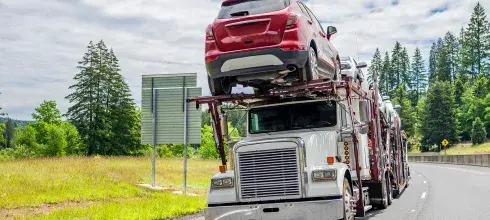
Yes, car dealerships can and do, in fact, ship cars to customers and other branches if they are a franchise. Many shipments are made locally or out of state in large quantities each month. These shipments are handled either by a branch of the dealership or an outside provider, such as Axis Auto Logistics.
There are many reasons a dealership would choose to ship a single vehicle or any number of cars from its fleet to another location. The vast amount of car shipping to another state is done to move inventory to a more desirable market.
Do Car Dealerships Deliver Cars?
Yes, some car dealerships can and will deliver cars to their customers once all of the appropriate purchase, financing, and legal documentation is finalized. It is an extra service that adds to the cost of buying a car, though the convenience outweighs the cost heavily.
If you need a vehicle delivered from a dealer, check if they provide the service, how much it costs per mile, and what sort of insurance they have for the service. If you are set on buying from a certain dealership, but they don’t and can't provide a delivery service, contact us and we can handle the details for you.
Nationwide Car Shipping: What You Need to Know

There are two levels to car shipping: the carrier and the brokerages. Axis Auto Logistics is a brokerage that works with carriers who carry out the actual service.
Brokerages deal with the carriers, handle the paperwork, negotiate the pricing, evaluate the risk based on the carrier’s experience, and a lot more.
Not all carriers handle nationwide shipping, and if you are a company or individual that needs to ship multiple vehicles to different locations, you’d best do it through a brokerage, rather than deal with multiple carriers at once.
Understanding Delivery Options: Local vs. Nationwide

Local vs Nationwide delivery options are most different in the allocated distance. Local car deliveries are usually for individual vehicles on single open car haulers, whereas nationwide deliveries require much more specialized equipment, personnel training, and time to accomplish.
Local deliveries take a shorter time, usually within 1-2 days, depending on the vehicle or the availability of haulers. Nationwide deliveries take 9-10 days, depending on multiple factors.
Not all dealerships offer nationwide deliveries, whereas most car dealerships offer local deliveries. Nationwide shipping also costs more, and local shipping doesn’t.
Benefits of Vehicle Delivery
Having a vehicle delivered straight to your door or a nearby address is a great luxury that has become increasingly commonplace over the last two decades.
Before that, it was reserved only for the most special of cars or high roller customers, whereas nowadays, you can easily get your vehicle delivered without paying a pretty penny or the hassle of years gone by.
Convenience of Having Your Car Delivered
It's easy to understand, with the advent ot food delivery services, the concept of having your car delivered to you. You don’t really have to worry about handling the logistics at all, but rather enjoy and spend your free time in a more productive to you, way.
There are many things that make using a car delivery service a suitable choice for a person or company. Here’s what we think about the topic.
Time Savings: Avoiding Long Drives
The biggest and most obvious benefit of using a car delivery service is avoiding the long drive from the dealership or auction ground. Not everyone enjoys long drives across the country, and if you are one of those people, you probably dread the thought of being in gridlock or in traffic on the turnpike, wasting time, gas, and nerves.
Many choose to book such a service because they simply don’t have the time to spare, either for personal or professional reasons. Either way, it's great to live in a time where you can trust a stranger to get your car to you, without paying an absurd amount of money for it.
Safety Considerations for Vehicle Transport

Transporting a 3-ton vehicle is no joke, in fact if you are not carefully, it can be quite dangerous. Luckily, if you choose to have professional help with transporting your car, its done with the utmost safety and care in mind.
Car shipping is safer than driving, because the vehicle is strapped down to the trailer with several straps on all 4 wheels. This means its virtually impossible for it to move while the straps are tight, regardless of how rough the road is.
It is safer for you as you are not exposing yourself to bad driving, bad road conditions, and adverse weather, especially during the winter. And then there’s the topic of avoiding wear and tear on the vehicle itself.
Potential Cost Savings from Avoiding Wear and Tear
One of the biggest benefits of car shipping is avoiding the wear and tear on the vehicle and the potential future cost savings you will experience.
During transportation, the vehicle is technically moving, but not under its own power. This means it's not wasting gas, there’s no additional wear on the engine, brakes, tires, wheels, and suspension - all costly parts that would otherwise need to be replaced if you drove the car yourself.
There is, however, the question of shipping the car on an open vs an enclosed trailer. Open trailer car transport is cheaper and more readily available, but it exposes the car to the elements and road debris, which can affect the paint.
Cost Factors for Car Delivery
Before having your car delivered to you by your dealer, you should ask for a quote for the delivery. It’s also important to understand what goes into the pricing of such a service.
This section is designed to show you what companies like Axis Auto Logistics take into consideration when pricing their quotes and to give you the tools to determine if the dealership is giving you a fair price.
Overview of Car Shipping Costs
There are many, many different things that will affect the price of any car shipping - things you can change, and things that are objectively unchangeable - like the distance and the weight, and the size of the car.
The price and rarity of the car will also affect the price of shipping due to accommodation requirements, such as a lift, an enclosed trailer, a car cover, and the like.
Distance is by far the most dominant determining factor in car shipping costs, and we’ll get into why exactly that is.
How Vehicle Size Affects Shipping Rates
In terms of ease of shipment, larger vehicles are not that hard to ship from one place to another; however, the size does affect the cost.
Bigger and longer vehicles take more space on a car hauler, which means that fewer cars can be shipped at the same time. This means less profit for the carrier, while spending the same time and gas money to travel the distance.
Carriers bundle vehicles that are heading in the same direction both for customer convenience and effectiveness. It lowers prices and delivery times.
That’s why large vehicles are often shipped in pairs or on their own to avoid messing with the gentle balance of carrier maths, while also providing the needed quality and safety of work.
Seasonal Variations in Car Shipping Prices
Seasonal price fluctuations are a fact in the car shipping industry, and they have been ever since the beginning. That is because with the different seasons, the demand changes - especially during the winter.
Frost, snow, and road salt make a lot of people hesitant to drive a long distance because it's dangerous for both the driver and the car. So the winter sees the biggest demand increase, increasing the cost of the service.
But why? Because there is a limited supply of carriers each week who are available for a certain route, and with the increase in demand for that route, the prices also go up.
Understanding Shipping Distance and Its Impact
Why is shipping distance the biggest price factor in the industry? Because distance, over a fixed speed, equals relatively fixed time. In simpler terms, it means that carriers spend the time to safely transport a vehicle to a certain location, and that time costs them money - but this is why common sense and everyone understands it.
The hidden reason why longer distances cost more is that carriers have to find other vehicles going along the way of your car, for it to make financial sense for them.
It’s a logistical puzzle that is constantly rearranging, and the good carriers and brokerages have learned to master it. It’s the only way to get better and to stay on top.
Carrier Types: Open vs. Enclosed Transport
One more thing that affects the price of car shipping is the choice you make for a car carrier type. There are two main ones - open and enclosed. Open transport is more affordable because it fits more cars, it's readily available, and does not require additional skill to operate.
Enclosed car transports fit fewer cars, sometimes only 2; they are fewer in numbers overall, and require special training to operate properly and safely. Enclosed car shipping is usually the choice of car collectors, owners of exotic or rare cars, who don’t like taking chances on the road.
Rushed Deliveries: What They Cost
Not every carrier can do rushed deliveries, simply due to training and driver availability. Rushed deliveries are a logistical nightmare that requires precision and supreme organizational skills to pull off.
What the service entails is getting a car or fleet of cars to and from a location as fast as possible. This is the most expensive service in the industry, and the reason why is that the carrier has to drop everything and prioritize your vehicle over every other one.
Hidden Fees to Watch Out For
Some dealerships or carriers tack on hidden fees onto transport jobs, or simply don’t disclose fees that are otherwise normal. Why, we don’t really know - possibly to make the price look appealing.
It’s not free in and of itself, but there is an additional cost to car shipping if the vehicle is in a particularly remote and hard-to-reach place. Car carrier trailers are quite long and large, and cannot maneuver well in tight spaces - it takes longer, therefore it costs more.
The Dealer Trade Process
Dealerships trade cars amongst each other, either inside the company or with outside dealerships. The reason for it is getting a more desirable batch of cars from one place to another. With the shift of the market, customer demand, and dealership requirements, so do cars - driving them is not an option - so they ship them.
What Is a Dealer Trade?
As mentioned above, dealer trading is the act of moving any number of cars from one dealership location to another. It can be accomplished with an internal shipping service or an external one, like Axis Auto Logistics.
There are many reasons why a dealership will trade one car for another, either for a customer to pick up, or to get a more desirable vehicle to a certain state.
A dealer trade can also be done to fulfill a need for a certain type of vehicle that has been sold out or is brand new to the market - meaning it's not currently in stock, but needs to be.
How Dealerships Access Vehicles Not in Stock
An in-stock vehicle is a car that is on the dealership lot or a holding lot. If it's not in stock, that means the dealer has no possession or easy access to it. A dealer trade fulfills the need to stock a certain type, make, or model of a vehicle that is required for that particular location.
They can trade with other dealerships or with private sellers to fulfill their car availability needs. This process is entirely legal and permitted by both federal and state laws; however, there are some requirements for the dealers.
The Role of the Internet in Vehicle Availability
How do dealers find the cars they need? They use the internet, of course! There are internal, public, and private messaging boards where dealers publish what they are looking for, and other dealers place offers for a trade.
Once the trade is approved on both ends, it’s up to the seeking dealer to organize the shipping process for the trade - they send a car and receive a different one back.
Benefits of Dealer Trades for Customers
Dealer trades are extremely beneficial for the end customer because it mean shorter waiting time for a particular vehicle. Before the implementation of dealer trades, customers would have to wait for months to receive the vehicle they had bought.
Nowadays, it takes days to receive the car of your dreams without any additional cost. It also means that you can get access to a vehicle that is not available in your state, either due to legislation or due to low demand.
Shipping Cars Between Dealerships
Dealers use car trades as a tool to maximize their profits and minimize vehicle depreciation. The longer a car sits on the lot, the less money a dealer makes on it - so it makes sense to trade it for a more desirable model.
Overview of the Shipping Process for Dealer Trades
The shipping process for car dealer trades is not that different from that of a regular customer. The only main difference might be the quantity - dealers move a lot of cars at once.
This requires finesse and proper logistics to accomplish smoothly, so only proven carriers are used for this particular job. Carriers with the ability to be accommodating, flexible, and accountable are the ones that usually fulfill dealer trades.
The Importance of Reliable Auto Transport Companies
Dealer trades are the lifeblood of car dealerships, and having reliable auto transportation to and from a dealership is paramount to the smooth operation. Having something go wrong, a delay, damage, or a loss, can be disastrous for a dealership - it can lose them a customer, reputation, and money.
Criteria for Choosing a Trustworthy Transport Company
Trust is earned, not only in the auto shipping industry, but in life in general - losing trust is easy, building it is hard. As an auto shipping company, we spend a lot of time looking for the best carriers for our customers, private or dealerships.
One criterion we are looking for is their capacity to work with large quantities. Another criterion is their ability to adapt to the changing circumstances - but most importantly - their ability to stay on schedule no matter what.
Finding a reliable carrier is hard, and keeping them on your side takes work and dedication. We build lasting relationships because their work is our work, and our work is satisfying and fulfilling the needs of our customers.
Choosing an Auto Transport Company
Car dealerships choose auto transport companies similarly to regular private individuals - they look for the best quote and the best delivery dates.
The key difference between a dealership and a private customer is that dealerships transport a lot of cars at once. They need to be sure that their inventory will reach its location intact, safely, and on time - no excuses, no compromises.
Carriers who deal with car dealerships need a larger insurance policy because the cargo they carry is more valuable to the end customer.
Key Factors to Consider in an Auto Transport Company
- Are they reliable?
- What is their capacity?
- What sort of insurance do they carry?
- Do other dealerships use them?
- Do they have certified personnel?
- How long have they been operational?
Licensing and Insurance Requirements
Every carrier needs a certain number of licenses to operate in the U.S., as well as two insurance policies. Here are the details:
- USDOT Number - issues by the FMCSA
- MC Number (Motor transport number)
- FMCSA License and Compliance
- Cargo Insurance Coverage (Up to $250,000)
- Liability Insurance
- State Specific Transport Permits
Brokerages need bonding requirements as they protect both the broker and the carrier in case of fraud or contract violations.
Experience and Track Record: Why They Matter
Experience usually means efficiency, safety, and reliability - it also means preparedness in the face of unpredictability, which can be detrimental when dealing with commercial clients such as a car dealership.
It's also important that the carrier has a proven track record of successful transportation jobs for the particular routes a dealer is interested in. An inexperienced carrier can cause problems for a commercial client; delays, damages, and losses can be devastating for any company and will affect the bottom line.
Experience also means efficiency of operation, fewer to no headaches, safety, and reliability. Experience is earned with years of hard work, and at the end, it pays off because it builds trust - and trust is everything.
Evaluating Customer Reviews: What to Look For
There are a lot of fake customer reviews or paid-for reviews on Google and other platforms. There are also a lot of real reviews - so how do you tell them apart? Intuition is a good place to start - you can just tell when the comment is fake because it's been left by someone who has been paid to do it - there is no feeling of personal experience.
Look at the 2-3 star reviews - those usually have some valid information to them, information of both the positive and negative experiences with a business. Seek out objective reasons for the low score - bad service, delays, damages, undisclosed costs, etc.
Steps to Arrange Vehicle Shipping
So you’ve finally settled on the car you want, you’ve found the dealer, and you have arranged for the financing of the purchase. Now you have to get the car to you - here’s what our professional experience shows - hope it's helpful.
How to Request Vehicle Delivery from a Dealership
Make sure the dealer offers a car delivery service; if they don't, you’d need to arrange for it to happen. If they do, ask before finalizing the purchase so they can bundle the cost of shipping with the end price of the vehicle.
Some dealerships have service availability posted on their websites; other dealerships don’t. Just ask over the phone or in person if you are buying personally.
We recommend cross-checking the quote price from the dealer with our price calculator to see if they are inflating the rates.
Questions to Ask When Inquiring About Shipping
The best way to inform yourself on a topic you have little experience with is to ask. Here are some smart questions to ask the dealer about the shipping service they provide:
- Do you carry out the service, or is a 3rd party involved?
- What sort of hauler is going to be used?
- How much is it going to cost?
- What sort of insurance coverage are you providing me with?
- Can you give me a price breakdown?
- What is the delivery deadline?
- Can you take detailed photos of the car before it goes on the trailer?
- What auto transport service are you using?
Understanding the Paperwork Involved
There are 8 important documents that you have to request from the dealer in order for the sale to be legal and for you to be able to pay the sales tax in your state and register the vehicle once it arrives.
- Buyer’s Order (Purchase Agreement)
- Title and Ownership Documents
- Temporary Tags
- Odometer Disclosure Statement
- Bill of Sale
- Financing and Loan Documents (If financed)
- Proof of Insurance
- Gate Release and Shipping Permit Copy
What to Expect During Delivery
Waiting for your new car to be delivered is an exciting moment in your life; it's a big move and a big purchase for any American. Expectations can drive people nuts, so here’s what to expect during the delivery time.
Preparing for Your Car's Arrival
Your car is about to arrive, but there are still some things to do to make everything perfect. Here’s what to do to prepare for its arrival at your doorstep.
- Make sure there’s enough space for the hauler to drop off the car safely.
- Make sure you have all of the proper documents with you.
- Make sure you’ve made enough space and have a place to park the car legally (Beware of street parking)
- Prepare a care package for the carrier (not mandatory, but a nice human gesture)
Inspection Upon Delivery: What to Look For
We recommend inspecting the car before it's driven off the car hauler - you’ve bought it, but it's not yet in your possession, and you can make an insurance claim if there’s damage that has not been disclosed or has occurred during the transportation.
Inspect the doors, hood, and front bumper. Check the roof for leaks from the car above, and check if the tires are inflated. Check the windshield for rock chips and generally do a once of the paint to see if there are scratches. Check the headlights, read lights, and if the trunk closes and opens properly - you are basically checking for impact damage.
Also, check if all of the proper documentation has arrived and check and match the VIN on your title, and that of the car.
Common Issues to Address Before Completing the Transaction
If there’s damage, make sure to document it thoroughly; if there’s no damage or difference from the reference photos, make sure the car starts.
- Ask for the keys.
- Ask for any additional documents.
- Ask for fluid or gas levels.
- Check tire pressure.
- Make sure VIN matches.
If everything is ok, then you are set to go and enjoy your new purchase - it’s a wonderful feeling getting a brand new car, so enjoy it thoroughly.
Pros and Cons of Shipping a Car
There are always two sides to a coin - pros and cons, if you will - and it's important to understand what those are with car shipping, so you have realistic expectations and don’t get disappointed.
Advantages of Vehicle Shipping
The advantages of car shipping are that you don’t have to drive it, if buying from out of state, you don’t have to deal with inspections, or temporary tags.
You can enjoy a greater selection of vehicles because you are not restricted to the inventory of your local dealerships. You avoid adding mileage to your car and with it wear and tear, and most importantly, you save yourself the effort.
Disadvantages: Additional Costs and Delays
The disadvantages of getting your car shipped from a dealer are realistically fewer than he advantages; however, you should know about them.
The additional cost
Car shipping costs money, sometimes up to $2,500, depending on many factors, but mostly on distance and route difficulty. This additional cost may reduce your choice due to budget constraints.
Delays
Car shipping is prone to delays, rarely due to human error, but sometimes due to bad planning. Mostly it's because of bad traffic, weather or other external factors. If you are under a time crunch, then these delays can be quite the headache.
Making the Right Choice for Your Vehicle Needs
Of course, making the right choice for your needs is both smart and healthy for you. If the car is expensive and you want to guarantee you keep its pristine condition for as long a possible, go for enclosed car shipping.
If your timetable is tight and your schedule does not allow for delays, then get the guaranteed pick-up and delivery services - they cost more, but are worth it.
Legal and Regulatory Considerations
There are multiple things to consider when dealing with car shipping from another state. As a private individual, you need to be aware of your personal responsibilities.
Understanding State Regulations on Vehicle Shipping
The carrier has the burden to have the required licensing in order to cross state borders while transporting a vehicle. You, on your part, have the responsibility to comply with state regulations on emissions, safety inspections, tags, and sales tax.
You have to pay sales tax regardless of whether you plan on driving the vehicle. Tags, inspection, and emissions compliance are required only if you plan on driving the car within your state.
Liability Issues: Who is Responsible During Transport?
The short answer is that, once you buy a vehicle from a dealer and the dealer arranges for the shipping, the whole responsibility during transport sits on the shoulders of the carrier. They are required to have both liability and cargo insurance, both of which cover different aspects of the service.
If any issues arise with your car during transport and before drop-off, the carrier’s insurance is required to cover it.
Insurance Implications for Shipping Your Car
As a service provider, the carrier is required to have cargo insurance that covers each vehicle for damages up to $250,000. If your vehicle exceeds this evaluation, then its required that additional insurance is placed on the cargo to cover any potential faults.
In the rare cases where there is damage to a vehicle, you need to make an insurance claim with the carrier’s insurance provider; however, be sure to document the vehicle before it's put on the hauler and after.
Clear before and after photos make the insurance claim process a lot smoother and increase your chances of it going your way.