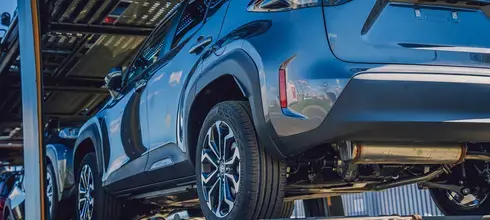


Will Gas Cars Be Worthless in 5 Years
Are gas cars here to stay, and how long will they be in demand? These vehicles are definitely not completely disappearing by 2031 and beyond. Some models’ resale value decreases in certain markets. Factors like fuel prices, policy changes, EV incentives, and shifts in customer preferences will determine which types of autos we use over the next five years.
Why Gas Car Values Are Dropping Fast in 2026
The main reason the value of gasoline cars is challenged in 2026 is the fluctuating cost of ownership. Retail gas prices are still a key factor determining the search of these vehicles. The US Energy Information Administration predicts that gas prices will fall by 6% in 2026, followed by an 1% increase next year. Despite that, the rates will remain lower than 2025’s gas prices. They are affected by the lower cost of raw petrol, wider gas supply worldwide, and its smaller share in the end price.
Other triggers of gas devaluation are government incentives and policy changes. The U.S. Department of Energy’s Alternative Fuels Data Center points out that tax credits for federal clean vehicles were given only to those obtained before September 30, 2025. But there are charging infrastructure credits that proceed through June 30, 2026. Although major EV purchase incentives are mostly over, smaller charging infrastructure support is still available for a limited time now.
Key Reasons: bans, incentives & Tech Shifts
Gas-car values are not threatened by national laws, but more by a number of other factors: regulations, technological innovations, and stimuli. In the United States, these are emission laws, changes in tax credits, and customers’ higher demand and preference for hybrids and electric vehicles.
EVs’ product variety, range, and charging access get better. People more often than before tend to compare them according to their ecological footprint, expenses for long-term functioning, and convenience. All that does not eliminate the demand for gasoline-based autos. It simply narrows down the number of buyers ready to pay a lot of money for older gas vehicle models.
Gas vs Electric Car Value Comparison
Recent market reports reveal that EVs’ resale values have been fluctuating and have increasingly depreciated faster than their gas car counterparts. So, electric cars create competition, but they can vanish abruptly. We cannot say that EVs destroy gas-car values in all cases.
What matters most for buyers is the overall cost for vehicle owners. Gas cars are widely familiar, easy to service, and buy. You can use them without bothering about where to charge them, which is not the case with electric vehicles. Gas autos are going to stabilize their value longer in certain segments.
Interestingly enough, EVs are generally cheaper in the long run. This is true especially in places that offer reliable charging options and where fuel prices are high. Electric cars’ major advantages are the lower expenses for energy and maintenance.
So, it comes down to specifics: what kind of automobile you need, where and for what purpose you will be using it.
Top 10 Cheapest States for New Cars in 2026 - Taxes and Fees Comparison
The US states where buying a car is highly costly are those with zero or very low registration taxes and sales taxes. For example, New Hampshire, Oregon, and Montana are among the most budget-friendly for vehicle owners. These states have no taxes on sales, which can save you hundreds of dollars with each purchase.
States like Florida, Ohio, Oklahoma, and North Carolina offer not only low taxes of about 2% to 3.25%, but also smaller dealer and administrative taxes.
Out-the-door price depends not only on the base cost of the automobile. It also includes:
· Sales tax – the largest extra expense
· Registration and title fees
· Dealer fees
· Local taxes and fees
Worth noting is that even if you buy a vehicle in a cheap state, you pay the tax according to where you have registered it, not where you bought it. In the most expensive states like Kansas and California, vehicle taxes can be over 7%, which considerably increases the end price. The difference in taxes and fees between states can reach several hundred dollars for the same automobiles. So, it’s worth taking into account.
Gas Cars Value Forecast: 2026 to 2031 Projection
Gas cars will still be used in 2031, but not all models will age well. The winners are vehicles that require lower expenses, compact models, hybrids, and trucks with high utility. These are likely to be more popular, unlike cars with weak resale histories or those that consume a lot of fuel.
EIA’s 2026 outlook indicates that gas prices are expected to fall on average in the near future. Here, the major long-term issues are the market’s gradual turn to electrification and the change in consumers’ expectations. One year of fuel price dropping will not have such an immense impact in the long run.
Are Gas Cars a Worthy Investment in 2026?
Gas autos can be a reasonable purchase in 2026, but under certain conditions. If the vehicle’s price is good, the model is stable, and the long-term expenses for the owners are moderate, it’s wise.
Not all gas-fueled cars retain value equally. Some used EVs have depreciated quickly, which has given gas autos a temporary advantage in certain segments. Factors like insurance, fuel economy, maintenance costs, and driving needs are key. Although gas vehicles may be cheaper upfront, they may be less long-term affordable, because of the higher and less predictable fuel costs.
Best Gas Cars to Buy Now Before They Tank
The models most likely to keep their resale value are small crossovers, efficient compact sedans, and hybrids with broad service networks and high demand.
Here’s the most efficient criteria for you to choose gas vehicles that are here to stay:
· strong reliability record
· efficiency in fuel economy
· high availability of vehicle components
· great overall buyer appeal
· proven resale history
We recommend you choose brands with established reputations in terms of durability and low maintenance costs. Examples of such are Toyota and Honda. Cheaper to repair and easier to maintain over time, vehicles are your best bet.
Focus on the market demand. Models that are constantly popular in the used car market are less likely to disappear quickly. To have a car that keeps its value longer, pay attention to its insurance costs and repair frequency, among other ownership trends.
How EVs Are Crushing Gas Car Prices
Economic and market changes have resulted in electric vehicles’ pressure on gas car prices. EV owners usually have far fewer operating expenses than gas car drivers. Studies show that electric vehicles can be 60% cheaper to fuel annually. Their fewer moving parts make them also cheaper to maintain.
Growing inventory and lease returns have quickly dropped used EVs’ prices, making electric autos more competitive than gas-fueled ones, even if they are second-hand.
Another key factor for the lower demand for gas autos is volatile gasoline prices, which often spike, driven by global events. As a result, trucks and larger SUVs have become less attractive to customers. Car manufacturers are making large investments in EV production, which increases supply and competition among electric vehicles.
Fuel Costs vs EV Savings - a 5-Year Calculation and Comparisons
Here’s a realistic 5-year comparison that underlines the financial gap between EVs and gas cars:
· Average gas car fuel expenses: ~$1,500–$1,700 yearly
· Average EV charging cost: ~$600–$700 yearly
· Annual savings: ~$800–$1,000
· 5-year savings from fuel: ~$4,000–$5,000
Savings on charging cost with EVs can exceed $1,100 per year due to higher gasoline prices of gasoline, which pushes the total 5-year savings closer to $6,000–$8,000.
EVs’ maintenance generally costs between 30% and 50% less, which is $800–$1,200 saved each year. Owners of electric autos save from gas and maintenance expenses as much as ~$6,000 to over $12,000 in total for 5 years.
EVs’ price, which is high, has significantly decreased in 2026, so much so that there are markets where their rates are already competitive with those of gasoline autos.
Gas Cars That Might Survive 2031
Not all gasoline vehicles will depreciate at the same rate. Some categories are more likely to be in demand through 2031. These are:
· Hybrid vehicles are certainly more fuel-efficient and don’t rely entirely on charging infrastructure. This makes them a very practical transition option.
· Fuel-efficient compact cars have a big advantage - smaller operating costs, making them competitive against electric cars.
· Proven as reliable models in constant high demand: these are vehicles that have been resold multiple times. Their consumer car parts are easy to find and not too expensive.
· Large vehicles used for work, such as vans, trucks, and the like – these may be invaluable in towns and cities that lack developed charging infrastructure.
With all innovations and improvements in EV technology that expand into more categories, even the types of vehicles presented above are challenged to stay.
How to Sell Your Gas Car Before It Loses Value
The right timing and well-positioning are key for those who plan to sell their gas autos lucratively. So, follow these practical tips:
· Sell your auto before major market changes catch up: The growing demand for EVs and the drop in their battery prices speed up the depreciation of gas cars.
· Pause sales in periods of high fuel rates: When gasoline prices go up, of course, the demand for cars that use it declines, especially if the vehicles are fuel-hungry.
· Highlight your car’s reliability and efficiency: Buyers will always value low running costs and durability in vehicles.
· Sell during warranty and low mileage: The two factors improve resale value immensely.
· Stay up-to-date with local demand trends: In some regions, the limited EV infrastructure makes gas cars preferred, so they sell faster.
Gas auto depreciation is mainly caused by technology’s involvement in our lives, not just by vehicle aging.
In summary, gas autos are not becoming worthless in five years, but the market is changing so fast that some models will lose their value more rapidly than others. The major factors for the upcoming changes are the highly volatile fuel prices, the government incentive shifts, and the growing comparison between EVs and gas vehicles. The latter displays significant differences that may be the trigger that makes many customers act fast.
Today, gas cars are still used, and there’s a decent market for them. Despite that, their value is more and more unpredictable and highly dependent on fuel and maintenance expenses than before. Overall, the 2026–2031 period is likely to be marked by most gas vehicles continuing to lose attraction, although some effective, reliable, and work-oriented models may remain widespread for longer.