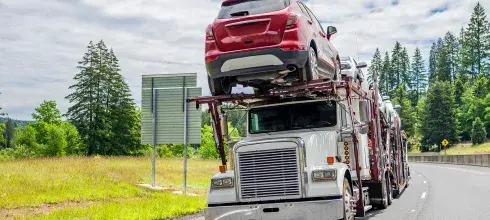


F1, or Formula 1, is one of the most spectacular showcases of human ability and engineering; it's a marvelous display of what a car can do, even do it's a highly specialized vehicle. The televised broadcast is watched by more than 700,000 viewers worldwide, with live crowds numbering 200,000 spectators depending on the location.
It's glamorous, but it's also about the sound, the speed, and the competition - both a science and an art at the same time. But have you wondered how F1 teams transport their cars to the new tracks? This article is all about the logistics of transporting an F1 car.

Planning the Transport Process for F1 Teams
Like with everything complex, the first step is planning the entire process. There are tons of things to consider, nearly countless teams to coordinate at the same time - including the drivers, the engineers, the pit crews, and everyone behind the scenes.
The first thing is where the car is located and where it needs to go - this will determine the types of transportation available and required to finish the journey. If it's a European race, then ground-based transport is most likely to be used.
If it's an overseas race, for instance, Asia, it's most probable to use air freight or shipping, depending on the timeframe and the required times. After all, the vehicles must arrive well before the race, so any planning must take into account the timetable, testing, race preparations, and fine-tuning.
Key Players in F1 Car Transport Logistics
Moving a 1 million dollar car like an F1 car is not a one-man job; in fact, it's not even a one-team job. Multiple teams and operators, third parties, and companies are involved in the logistics behind this move. From freight forwarders, to customs brokers, airline cargo teams, trucking companies, the transport staff, and members of the F1 team itself - everyone plays a crucial role. Every single one of these people is responsible for the condition of the car and keeping to the strict schedule, providing an essential service.
The Role of Logistics Managers in F1
You are an F1 fan, you’ve probably heard that there’s a lot of pressure on teams, drivers, and mechanics to perform better each season - the same goes for the Logistics Managers in F1 - they are fully responsible for the transportation of everything the team needs, from the car itself, to equipment related to the car, to tools, in fact the entire workshop and pit area, each peace of crew equipment and safety gear - a lot of these items need to be accounted for at all times.
To say the least, this is not a position for the weak because it's a lot of pressure - one missing time and the whole clockwork mechanism fails - everything is related and consistency, precision, and predictability are key for the success of the team.
Freight Containers: What They Carry for F1
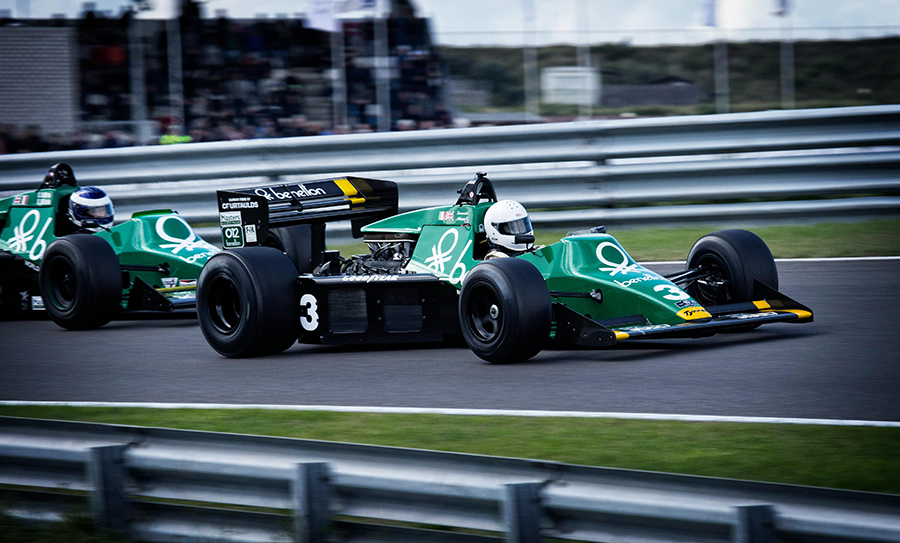
F1 freight containers are nothing like you’ve seen at your local dockyard - they are high-tech, quite complicated, because they hold everything a team needs to race. F1 freight containers can be expected to contain more than 10.000 individual pieces of equipment at any time - holding anything from car parts, the cars themselves, equipment for the team, tools, communications equipment, PPE equipment, and a lot more.
F1 freights contain everything that the team needs to operate anywhere in the world, from hospitality materials for the team to telemetry systems, pit wall setups, tool cabinets with precise instruments - pretty much anything you can and can’t imagine.
Types of Transport Used in Formula 1
There are many different ways an F1 team may choose to ship their car; basically, everything is at their disposal, and the choice depends on what suits their needs the most. From ground-based logistics like trucks, enclosed trailers, and freight trains, to air and water-based transportation infrastructure - it's all about the practical choice and what will be both safe and reliable for everything that is being shipped.
Ait freight is the premium option, reserved for the cars themselves or any other critical parts that need to reach their destination in pristine condition. It's super expensive, but it's worth it because it can be the difference between a clean race and a place at the podium, and a fail or a car failure.
Air Transport: Cargo Planes for F1 Cars
F1 teams don’t mess around, after all, the sport is the pinnacle of precision in organized motor sports for decades now, being one of the most televised programs in the industry. So F1 teams don’t take chances - air freight is the safest, most reliable, and by far the quickest way to get an F1 car to its final destination. And speed, just like with the races, is paramount - sometimes the entire equipment of the team, the cars and chassis, needs to be shipped within a few days of finishing a race, all to reach the final destination and for the weekend race.
Air transport isn’t simple because the cargo needs to be balanced, everything needs to be in order and accounted for throughout the process - there is no guessing in F1, everything needs to be precise, clean, and optimized to perfection.
Step-by-Step Process of Packing F1 Cars
Packing an F1 car for shipping is a highly technical, precise, and structured process designed to protect vital components, use the available space optimally, which ensures rapid assembly once at the final destination. It follows strict procedures and has a zero tolerance for mistakes.
- Step 1: Pre-packing inspection and documentation
- Step 2: Disassembly of F1 Cars
- Step 3: Cleaning components and packaging
- Step 4: Specialized package protection
- Step 5: Packing the F1 Chassis
- Step 6: Double-checking the inventory and sealing containers
- Step 7: Transport coordination
- Step 8: Arriving and systematic disassembly
This process is quite intricate, extremely precise, and it's very necessary - one thing missing, one component out of place, damaged or otherwise compromised, and the entire chain of operation is at risk. Of course, there are redundancies in place to protect the team; however, the processes necessary to ensure success apply to every aspect of team life - from diet to nutrition, to equipment logistics.
Disassembling Cars for Air Transport
F1 cars are disassembled partially when being prepared for transportation, every sensitive piece of equipment, from electronics, wings, and spoilers, everything that is fragile and can be broken off when transporting. The idea is to protect any fragile components, while also optimizing the space in the container - a snug fit is a good fit.
Specialized Containers for Safe Transport
F1 teams rely on specialized containers that can’t be bought off the shelf - they are made for them, providing static electricity protection, force trauma, water, and even gas protection - they are fully sealed, providing 100% protection, almost like an airplane’s black box, but for F1 components. These boxes differ in size - some can carry an entire car inside, others carry layers of equipment and instruments which are used for diagnostic purposes.
Sea Transport: When and Why It's Used
Air transport is fast but expensive, and while F1 is known for its rich teams, sometimes sea transport will suffice for non-urgent items. Sea transport is used weeks, if not months, in advance of the more urgent items and equipment. Sea transportation is slower, but it's by far more cost-effective for the team - it's essential to cut unnecessary logistics costs.
Road Transport: The Backbone of European Races
Europe is one big land mass, aside from the U.K., and anytime the F1 calendar comes around, the European leg, trucks become the unsung hero. F1 teams rely on specially equipped fleets to move cars, spare parts, and all of the relevant gear for the team, from one part of the leg to the next. Everything is done with the utmost care, and compared to air and sea freight, road travel is surprisingly capable and quick. It’s characterized and considered to be quite nimble - it allows teams to get things together faster, coordinate, and be flexible when the situation demands it - especially being able to handle last-minute changes. European roads are also characterized by being in very good condition, making the long drives not as brutal as they would be on other continents. Trucking is extremely convenient for F1 teams, making it the backbone of F1 logistics - it goes where it's needed, does what it's supposed to, and it does it at a great value.
Coordinating Ground Logistics Between Races
Of course, F1 races can be a sprint, but the time between races is a marathon, and it needs to be done with great precision - this is where the most juggling comes. There are border crossings, nailing the loading and offloading schedule, rotating truck drivers, nailing arrival times on track - amazingly, more things don’t go wrong. It can be especially stressful when there’s a back-to-back race weekend where teams need to scramble, disassemble everything, package it, and move it to where it needs to go. You can imagine that all of this can be nerve-racking, especially if even a single delay occurs - it calls for immediate problem-solving, real-time keeping, while also moving everything else smoothly along.
Managing Freight Schedules for Multiple Locations
F1 teams aren’t in one place at a time - while one part of the team is finishing a race, another is already at the new location, settling in and preparing things for the rest. At times, it's possible to coordinate 3-4 different teams in 3-4 different locations at the same time, and all of them have to work in sync, being dependent on each other’s results and precision.
This is achieved through clear structures, communication, and pre-prepared action plans, which don’t allow any guessing. Everything is known and prepared in advance - all of the next steps are practiced and learned by heart, every link is connected, and every team member knows and does their job perfectly. It’s a high-stress, high-speed environment that requires nothing but the best from people.
Cost Breakdown: How Much Does F1 Transport Cost?
F1 is an expensive sport; in fact, it might be THE most expensive motor sport nowadays - that’s because it's at the peak of mechanical and human performance. Given that, it's absolutely adequate to consider the costs being extremely high. But how high? Moving an entire team, all of their equipment, all of the personnel, considering all of the people involved, it's safe to say that a single move for a single race can cost multiples of millions of dollars.
Teams spend millions on logistics alone - because you are looking at freight carters, sea shipping, trucking, customs fees, insurance, and specialized handling, which takes care of the finer details and the sensitive equipment. That’s before even considering any last-minute changes, rushed shipments, etc.
Factors Influencing F1 Transport Expenses
Every leg of F1 is different; there is no one-size-fits-all solution to the number of issues that can come up. The biggest factor influencing F1 transportation expenses is the care and preparation - the sheer amount of manhours, the specialized equipment, the training, and taking care of the personnel - all of that determines the final costs per trip. It’s a race with time, and that race costs a pretty penny each time, but with good preparation, optimized processes, and professionalism, it's possible to both achieve the best results and lower the already high costs of transporting an F1 car.
Safety Protocols in F1 Car Transportation
F1 is big on safety; it's not just marketing, it's not just a word to them - they live and breathe it every step, in every process, would that be the races themselves, the cars, the drivers, or the shipping process?
In the case of transporting an F1 car, safety is extremely important due to the sensitive electronics and hybrid system. In particular, there a stringent FIA and UN regulations ISO 1988 and UN GTR 13, which detail specifically how an F1 car should be handled.
Due to the abundance of hazardous and relatively volatile materials used to create an F1 car, only trained personnel from the FIA can inspect the final loads to ensure that all specifications and safety requirements are met, e.g., gas tanks are vented and prepared, electronics are secured and protected, etc.
Challenges in Transporting F1 Cars
The challenges of transporting an F1 car are immense - it's not just about the value of the vehicles, it's about the reputation of the organization, the safety of the individual, and the safety of the environment.
An F1 team is a large organization, with a lot of people, each person expertly handling their own roles’ responsibilities. The biggest challenge is keeping each cog moving, every problem solved or removed so as not to impede the operation - it's basically like trying to change the wheel on a moving car.
Logistics managers have to bring order to chaos; they need to organize everything, keep everything in check, and be aware of exactly what's happening at all times, what piece of equipment is in what box, who’s responsible for packing that box, and how exactly it's packed. Everything to the finest detail needs to be perfect, or all chaos breaks loose - every part matters, every hour counts.
Weather-Related Disruptions and Their Impact
Nature is unpredictable, even in the 21st century, and F1 logistics teams have to prepare for that - because preparedness means not avoiding the problems, but facing them head-on with a smart, well-thought-out strategy.
The impact of an unexpected weather-related delay can be devastating; that’s why there are contingencies and redundancies in place, like sending multiple chassis with different types of transports.
Sending a team ahead of everyone else to prepare the bare minimum for the race, including replacement parts, tires, a car, etc. The biggest impact is in the procedural aspect of each shipment - better processes mean better results, even if the unexpected happens.
Customs and Regulatory Considerations
A part of operating the logistics of an F1 team is dealing with local customs and country regulations - every team’s logistics manager must be intricately aware of every law and how they need to follow and prepare for it.
Some countries are more lenient, while others have very specific rules and regulations in place to protect the borders of the country. There are rules on temporary imports, taxes, and inspections that need to be done, specifically on time, the right way - without causing a delay.
Solutions to Logistical Challenges in F1
The FIA has set a target to make F1 a far more ecologically friendly sport by 2030, with projected multimodal transport optimization allowing the F1 teams to choose the most suitable type of transport for their team’s needs, while also meeting global emissions targets.
Bui-fule-powered transportation, mainly trucks, as well as sustainable aviation fuel (SAF) investments, are made to further reduce the carbon footprint of the sport’s logistical side. In terms of organizational challenges, each team handles them differently, with the end goal always being the optimal performance of both car and driver.
Sustainable Practices in F1 Transportation
A big part of the carbon footprint of the sport is the logistics and the manufacturing of the vehicles. There are already many forward-facing solutions for manufacturing, including hybrid systems in the cars themselves - something also seen in Rally 1 cars.
FIA has made it clear that they are looking to make each and every F1 car 100% sustainable by 2028, with early projections of it being done by the end of 2026. While it might seem quite ambitious, the F1 continues to push the envelope, keeping on track with the changing narrative around global warming and the changes that need to be implemented.
Traveling Staff: Who Goes Along for the Ride?
There’s a whole army of people behind each vehicle, everyone from mechanics, pit crew, hospitality leasons, the drivers, team management, trainers, nutritionists - the list goes on and on. Drivers, race engineers, mechanics, logistics coordinators, and technical support staff all hit the road (or sky) with the team. However, not everyone goes to every race.
Teams pick specifically who travels and who stays, balancing the needs of the team and the cost of sending people abroad. There are personnel who support from a distance, observe and analyze telemetry, and the teams at the RND department - generally the parts of the team that support car development.
Transporting Team Members: Flights and Accommodations
It’s a big organization with a lot of people - each member responsible for a small part of the bigger picture. But as mentioned above, not everyone travels with the team. The ones that do travel need to arrive on time at the right place - all of their accommodations need to be prepared in accordance with their needs, because a well-rested and taken care of team is a team that performs well under pressure.
The Role of Catering and Hospitality Teams
The catering and hospitality teams are the unsung heroes of the traveling staff - they are the ones who have to know the dietary requirements of each team member, they are the ones who take care of the hearts and minds of the team, so everyone else can focus on the task at hand.
It’s their job to provide a high-quality, healthy, and nutritious experience to every team member - the same standards that drive everyone, from the president of the team to the driver, the engineers, mechanics, pit crew, etc.
They provide nutritious support, taking into consideration dietary needs and restrictions, while having to overcome menu sourcing anywhere in the world. They are the bulwark against the chaos of travel and high-speed, high-frequency teamwork - they are the ones that make abroad feel like home.
Importance of Timely Deliveries for Race Preparation
F1 is all about precision; everyone needs to be precise - the team, the driver, the pit crew - it's just professionals doing their job. It goes without saying that it's extremely important that every component, every part, every piece of equipment, needs to arrive on time - exactly where it's needed.
Race preparations can take up to 2 weeks before the actual event. The cars need to be tested, the equipment needs to be calibrated, and drivers need to be prepared. All of this hinges on the logistics team doing their job perfectly, handling any last-minute changes and emergencies with the grace of a true professional.
Keeping Track of All Equipment and Parts
Keeping track of so many moving parts at once requires extreme concentration, but it also requires the proper tools. F1 teams rely on proprietary software to track each component, each container, each truck, train, ship, or plane.
It's not a simple operation - it requires a lot of effort, and that effort requires a lot of passion and professionalism. No individual can handle all of this information alone, so it's all about delegating different tasks to different people - everyone has their responsibilities, which play into the responsibilities of others - connecting the chain and painting the bigger picture of a successful F1 team.
Costs of Transporting F1 Cars by Air vs. Sea
Shipping an F1 car by sea costs x50 times less than doing it by air; however, there are both advantages and disadvantages to that.
Air Transport:
- Cost - very expensive to do, hundreds of dollars per race, per car.
- Speed - very fast, very essential for time-sensitive components that need to be shipped over a long distance.
- Used for - shipping cars, sensitive electronic components, and crucial equipment.
- Typical plane type - Boeing 747
Sea Transport:
- Cost - a lot cheaper than air freight, at times 50x cheaper, making it the GO-TO choice for heavier, non-urgent items.
- Speed - Slow, especially compared to airplanes - even though modern ships are the fastest, they are still one of the slowest modes of transport in the world, even slower than trains.
- Used for - shipping spare parts, garage equipment, hospitality gear, and generally less crucial items.
We hope this article has been as informative to you as it has been to us - it's quite an interesting topic with a lot of facets and details the average person does not consider. Hang around and take a quick peek at some of our other interesting topics.